
What does the part need to do?
Loads, wear, temperature, corrosion, and appearance help define the material and coating requirements.
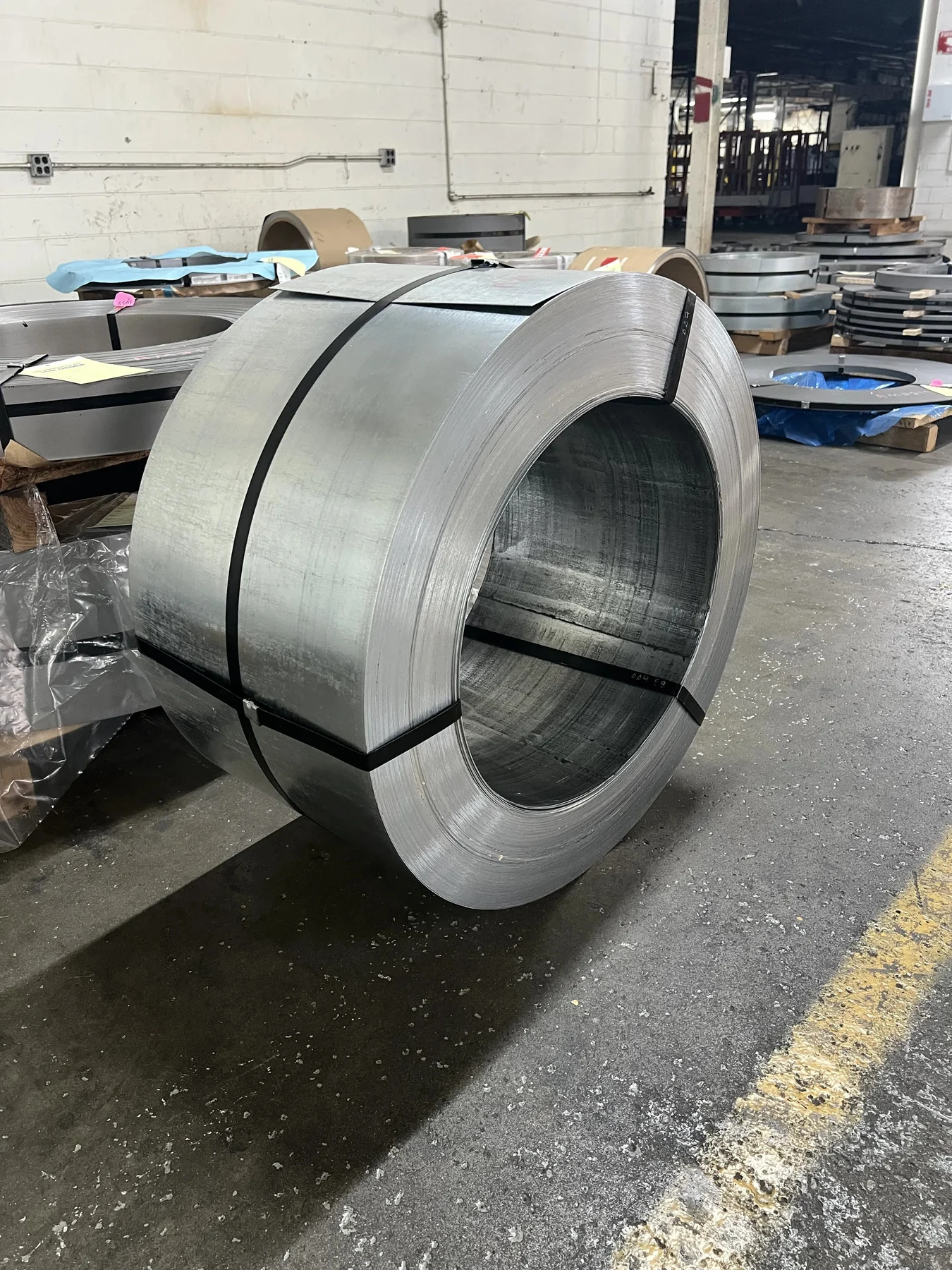
Materials at K-O
Explore sheet and coil for stamped and drawn parts. Match the grade, thickness, temper, and surface to the component you need to make.
Stamping & deep drawing
For a formed component, thickness is only the starting point. Grade, temper, coating, and geometry all belong in the same conversation.
Explore stamping & deep drawingK-O’s overall stock thickness range.
The working range for your part depends on its material, condition, and geometry.
| Material | Selection considerations | What to specify |
|---|---|---|
| Low-carbon steel | Formability for stamped and drawn parts. | Grade, forming quality, surface condition, and thickness; options include hot-rolled pickled and oiled (HRPO) and cold-rolled commercial quality (CRCQ) steel. |
| High-carbon steel | Hardness and wear requirements after the appropriate heat treatment. | Carbon grade, supplied condition, and heat-treatment requirements. |
| High-strength steel | Strength requirements that influence part design and forming. | Specified strength level, elongation, bend requirements, and springback. |
| Stainless steel | Corrosion resistance and the required finished appearance. | Grade, temper, finish, and forming requirements. |
| Aluminum | Weight reduction with alloy-dependent strength and formability. | Alloy, temper, thickness, and cosmetic requirements. |
| Galvanized & galvannealed steel | A zinc-coated surface for corrosion protection. | Base-steel grade, hot-dip galvanized, electrogalvanized, or galvannealed coating, and post-forming finish. |
| Aluminized steel | An aluminum-based coating for heat and corrosion considerations. | Coating specification, service temperature, and forming requirements. |
| Brass & copper | Alloy and temper selected around the formed component. | Exact alloy, temper, thickness, and surface requirements. |
| Tinplate | Tin-coated steel for parts with a specified coated surface. | Base steel, tin coating, thickness, and forming requirements. |
| Prepainted metals | Pre-finished stock with appearance and coating requirements carried through forming. | Substrate, paint system, color, thickness, and surface-protection requirements. |
For stamping, send the exact sheet or coil specification, including any required material standard and coating. For round bar, explore our Ground Bar Stock Materials.
Start with the application
A stamped part’s material specification includes more than its name. Review the application, forming requirements, and finished condition together.
Loads, wear, temperature, corrosion, and appearance help define the material and coating requirements.
Grade, temper, thickness, bends, and draw geometry influence the forming plan and the finished dimensions.
Include material records, quantities, surface protection, packaging, and delivery requirements with the part specification.
No. The .014–.500 inch range describes K-O’s overall stock thickness capability. The working range for a specific part depends on its material, condition, and geometry; we review those requirements together.
Provide the exact grade or material standard, thickness and tolerance, temper or supplied condition, and any coating or surface-finish requirement. Include the drawing and any forming or cosmetic requirements.
Send the exact sheet or coil specification with your drawing. Our team can review the material, forming requirements, and finished result before confirming a plan.
Put your requirements in motion
Send your drawing, material grade, thickness, supplied condition, quantities, and schedule. Include coating, appearance, and material documentation requirements.
Explore all capabilitiesSpecialty stamping materials
K-O also stamps plastic extrusions and plastic-coated magnetic materials. Share the stock specification, profile, dimensions, and functional requirements so the tooling and process can be reviewed together.