Low volume & prototypes
One to several hundred.
Support new-product development and specialty work. Prototype learning helps establish the production-intent process and verify the finished part before a larger commitment.
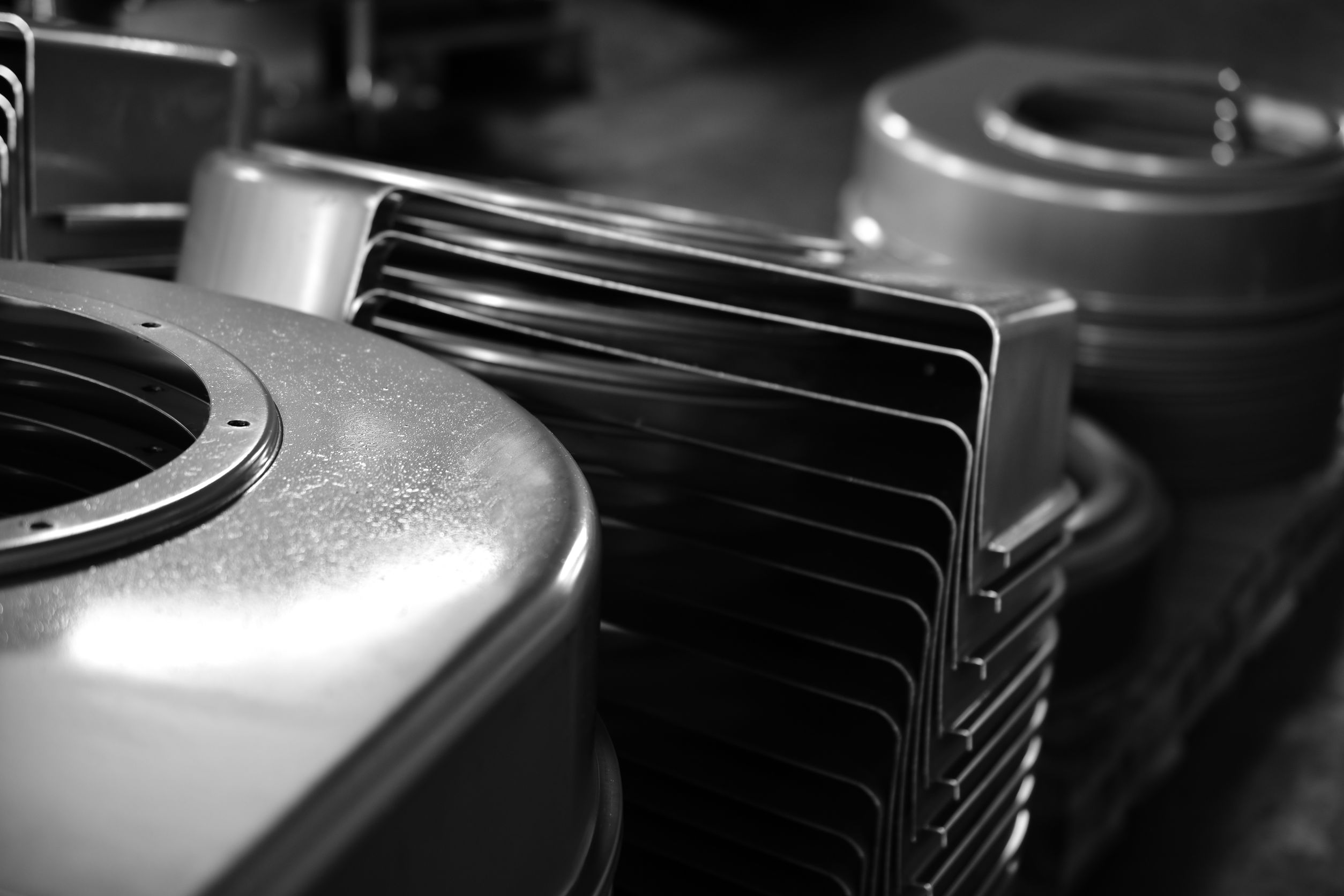
Metal stamping since 1938
Complex shapes. Practical production. From the first prototype to an ongoing program, we bring the tooling, forming, and supporting operations together around your part.
Request a stamping quoteA full spectrum of metal stamping
Metal stamping is the backbone of K-O. We manage programs for a wide range of industries, matching the tooling and production approach to your part, quantities, and schedule.
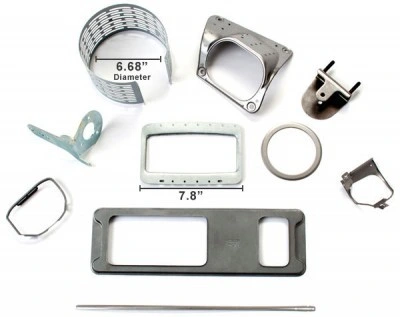
Low volume & prototypes
Support new-product development and specialty work. Prototype learning helps establish the production-intent process and verify the finished part before a larger commitment.
Medium runs · our core strength
We plan each run around your requirements, with a focus on consistent quality, clear communication, and dependable delivery.
High-volume progressive stamping
Progressive dies and just-in-time (JIT) component programs support the ongoing demands of your assembly line. Delivery planning follows your production requirements.
Deep-drawn stampings
Deep drawing forms sheet metal into three-dimensional shapes and enclosures, including parts that house long components. Housings, spring seats, and heat shields are among the shapes K-O produces.
Applications include automotive motors, suspension, exhaust, and fuel tanks, as well as appliances, industrial equipment, and other industries.
Discuss a deep-drawn part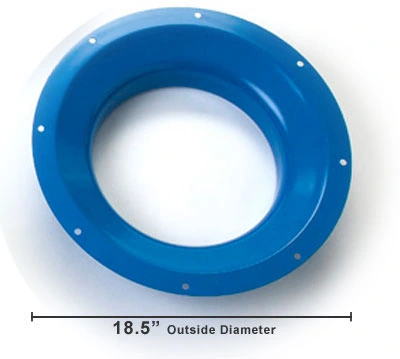
Material advances through progressive tooling with each press stroke. A sequence of controlled reductions develops the shape while limiting thinning and fracture.
Extended press beds accommodate oversized tooling. Cam-piercing, notching, and trimming stations can be integrated into the route rather than requiring separate operations.
Where the application permits, continuous throughput in one press can reduce handling, setup changes, and the variation associated with multiple operations.
Draw depth, openings, flanges, corner radii, mating features, and critical surfaces help define the route. Material grade, thickness, condition, and finish guide the forming sequence and tooling.
Engineering that moves the job forward
We review difficult and complex custom stampings with you to find a workable manufacturing approach. The aim is a part that performs as required and a process suited to producing it.
Our team can read most CAD files, develop CAD data from your drawings for approval and tooling development, or reverse engineer an existing part to establish its geometry.
Review design details for manufacturability, material use, and cost-efficient volume production. Progressive, compound, line, and transfer-die approaches are selected around the drawing and program.
Apply lessons from prototype work to the production-intent process. Part verification, critical dimensions, and the required quantity help establish the next stage.
Materials we stamp
Stock thicknesses from .014 to .500 in, with the grade, condition, and final finish reviewed for your application.
Supporting operations
Bring the supporting operations into the plan from the start, with requirements defined around the finished component or assembly.
The equipment behind the work
The force, tooling space, and press travel behind your part. These figures provide a starting point for reviewing your drawing and production requirements.
121–800 US tons
Mechanical and hydraulic presses, with the force and configuration matched to your part.
Rated press forceTwo large-bed options for different tooling footprints.
24 in
Two feet of vertical press travel on our 800-ton hydraulic press.
Travel available for the forming cycleBed dimensions describe the space for tooling. Finished-part size and achievable draw depth depend on the material, geometry, and tooling. We review these together to select the right press.
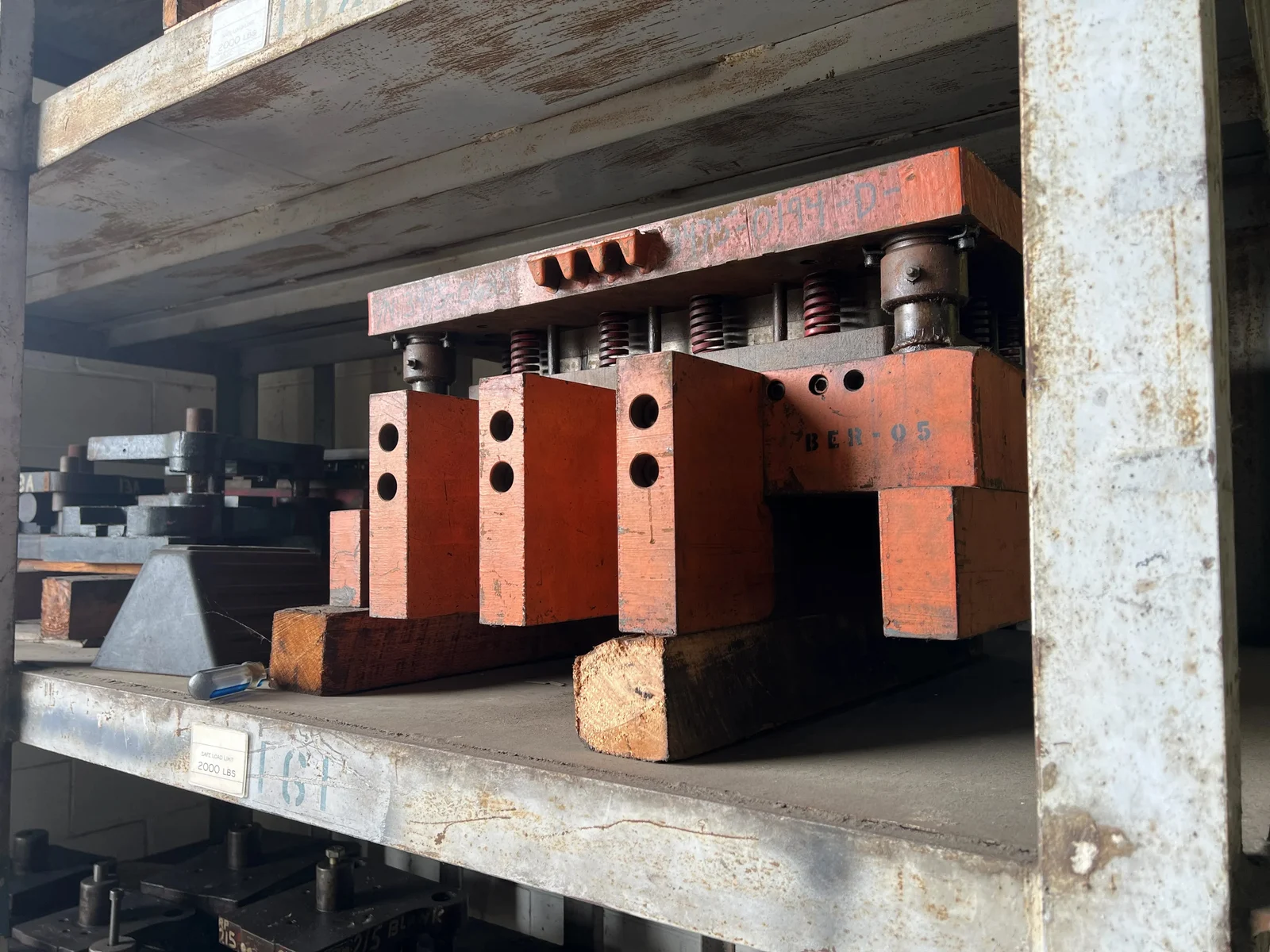
Share die drawings, condition, dimensions, feed requirements, and representative parts. We’ll review compatibility and any repair, maintenance, or modification needs.
Quality from the first part
Our automotive manufacturing experience informs how we plan and manage every job. APQP, PPAP, part verification, and systems tracking connect the requirements to production, with continuous improvement throughout the program.
K-O is certified to IATF 16949:2016 for the manufacture of metal stampings and assemblies.
See our quality systemLet’s look at your part
Send your drawing or CAD file, material and thickness, critical dimensions, intended use, quantity, finish, and delivery needs. Existing samples and tooling information are helpful too.